Performance Marketing for Hotels: Drive More Bookings with Measurable Campaigns

Performance marketing aligns your hotel’s digital campaigns with measurable goals, such as qualified inquiries, direct bookings, and booking revenue. Tracking and analyzing campaign results helps you refine ads, audiences, and budgets. What matters is identifying which activities contribute to your hotel’s financial success.
What Is Performance Marketing for Hotels?
Performance marketing is a data-driven approach to digital marketing that measures and optimizes activities against predefined goals. For hotels, these goals might include booking inquiries, direct bookings, gift voucher purchases, or newsletter sign-ups. These completed actions are called conversions. However, not every conversion has the same financial value.

Why Is Performance Marketing Important for Hotels?
Digital marketing for hotels helps you reach potential guests with targeted campaigns. Existing guest and reservation data plays a particularly valuable role. This data supports analysis, helps you evaluate the bookings generated, and informs ongoing campaign optimization. Performance marketing allows you to track and evaluate inquiries and direct bookings using key performance indicators (KPIs).
Analyzing results gives you ongoing insight into how guests search and the financial value your marketing generates. You can use these insights to refine campaigns and drive more bookings. Performance marketing also gives you the flexibility to adjust your ads as needed.
Performance Marketing Costs: Understanding Billing Models and Metrics
Performance marketing requires a clear distinction between billing models and performance metrics. Depending on the platform and campaign type, you may pay for clicks or ad impressions. Cost per inquiry or booking, by contrast, shows how efficiently your budget delivers the desired outcome. Optimizing a campaign for bookings does not automatically mean you pay only when someone books.
Cost per Click (CPC)
Cost per click (CPC) is the amount you pay for a click on your ad. With click-based billing, you incur this cost regardless of whether the person subsequently submits an inquiry or makes a booking.
Cost per Lead (CPL)
Cost per lead (CPL) measures advertising spend relative to the number of leads generated, such as newsletter sign-ups. CPL only functions as a billing model when the agreement specifically provides for payment per lead.
Cost per Action (CPA)
Cost per action (CPA) measures the average cost of a predefined action, such as a booking inquiry. A target CPA guides campaign optimization. It does not automatically mean you pay only for completed actions.
Cost per Sale (CPS)
Cost per sale (CPS) measures advertising spend relative to the number of sales or bookings generated. Paying exclusively for completed sales or bookings requires a separate agreement.
Which Channels and Activities Support Hotel Performance Marketing?
Hotels can use a range of channels to reach potential guests and reengage existing contacts. The right approach depends on your audience, offer, and campaign goal. Newsletter marketing and efforts to build organic visibility over time can complement search advertising and paid social media campaigns.
Search Advertising: Reach Guests Actively Searching for a Stay
Search advertising lets hotels display paid ads for relevant search queries. This helps you reach potential guests who are already looking for a hotel or planning a stay. When evaluating results, look beyond cost per click to qualified inquiries, bookings, and the booking revenue attributed to your campaigns.
Search Engine Optimization: Build Organic Visibility Alongside Paid Campaigns
Search engine optimization helps hotels appear in unpaid search results. It complements paid campaigns and typically delivers results over a longer period. You can also evaluate organic website traffic based on the inquiries and bookings it generates. However, organic search does not involve paying for ad clicks.
Social Media Advertising: Reach the Right Guest Segments
Paid ads on platforms such as Instagram, Facebook, and TikTok can help hotels reach relevant guest segments. The right platform depends on your audience, offer, and campaign goal. Organic posts and community building complement these activities, but they are separate from paid advertising.
Newsletter Marketing
Newsletter marketing for hotels can serve several purposes. Define your goals before you begin. Strengthening guest loyalty and generating upsells from existing reservations are both valuable objectives. Newsletters also keep returning guests informed about current packages, offers, and gift vouchers.
How Can Hotels Measure Campaign Success?
To evaluate hotel campaigns, connect advertising spend with qualified inquiries, actual bookings, and attributed booking revenue. Click-through rate and cost per click help you optimize campaigns, but they do not provide a complete picture of financial performance.
Return on ad spend (ROAS) compares revenue attributed to advertising with advertising spend. Assessing profitability requires you to account for additional costs and understand the calculation method. You also need to consider which bookings a campaign receives credit for and the reporting period.
What does successful hotel performance marketing look like in practice? The Active Family Spa Resort Stroblhof case study presents real results from data-driven digital marketing. Download the free case study.
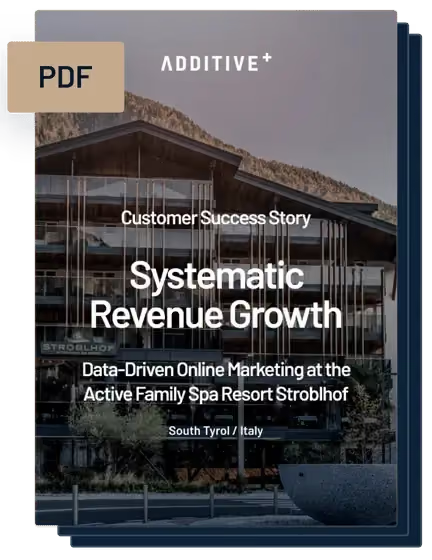
- The results of the marketing campaign at Stroblhof Resort
- 7 success factors for data-driven hotel marketing
- Specific tips on how to systematically generate revenue
- Make guest communication effective and predictable

- The results of the marketing campaign at Stroblhof Resort
- 7 success factors for data-driven hotel marketing
- Specific tips on how to systematically generate revenue
- Make guest communication effective and predictable
Systematic Revenue Growth:
How the Stroblhof Resort measures marketing success in reservations
- The results of the marketing campaign at Stroblhof Resort
- 7 success factors for data-driven hotel marketing
- Specific tips on how to systematically generate revenue
- Make guest communication effective and predictable
Frequently Asked Questions About Hotel Performance Marketing
- The results of the marketing campaign at Stroblhof Resort
- 7 success factors for data-driven hotel marketing
- Specific tips on how to systematically generate revenue
- Make guest communication effective and predictable