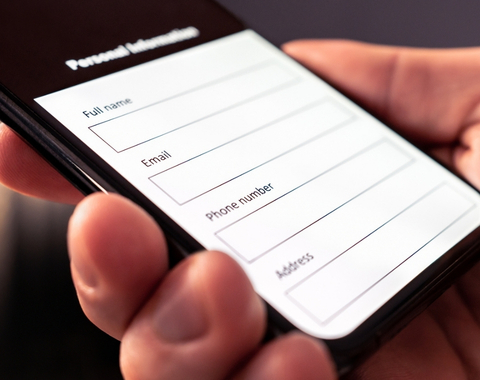
Landing Page or Hotel Website? How to Turn Hotel Marketing Clicks Into Direct Bookings

Many hotels invest in Google Ads, social media ads, or newsletter campaigns to generate more direct bookings - but lose potential guests after the click. This article explores the role the destination page plays in turning paid traffic into bookings.
Hotel Website or Landing Page: What’s the Difference?
In digital hotel marketing, websites and landing pages serve different purposes. Both are important, but they are designed to accomplish different goals. Hotels running paid ads need to understand this distinction because it can determine whether a click results in just a website visit – or an actual booking
The Hotel Website as Your Digital Foundation
The hotel website is the central digital destination for the property. It presents the hotel as a whole, from rooms and offers to dining, wellness, and booking options. It also builds trust, communicates the brand identity, and supports long-term visibility in search engines such as Google.
For guests who are still researching their options, the hotel website is essential. Someone unfamiliar with a hotel wants to explore, compare, and get a feel for the property. That is exactly what a strong hotel website is designed to do: provide comprehensive information and showcase the full hotel experience.
The Landing Page as a Focused Campaign Destination
A landing page does not need to present the entire hotel. Instead, it serves as a focused destination for a specific campaign. Unlike the hotel website, it centers on one topic and one clear goal: guiding users toward the desired action – such as submitting an inquiry or making a booking – with as few distractions as possible.


Why the Destination Page Affects Hotel Campaign Performance
Many hotels invest in online campaigns but underestimate how much the destination page can influence campaign results.
When someone clicks on a hotel ad, they are responding to a specific promise—perhaps a particular offer, travel period, or vacation idea. If the click takes them to the general hotel website, they often have to search for the relevant information themselves.
A landing page, by contrast, immediately continues the promise made in the ad and focuses only on the relevant content. Imagery, messaging, the offer, and the call to action all work together. Guests can immediately find the information that motivated them to click.
For example, if someone clicks an ad promoting a “fall wellness getaway,” the landing page can speak directly to that interest with the right headline, inspiring imagery, relevant offer details, clear benefits, and a direct opportunity to submit an inquiry or book.

Real-World Example: Comparing Conversions and Booking Revenue
The impact of the destination page becomes especially clear with a simple example. Assume a hotel runs Google Ads and sends 1,000 visitors to its destination page.
If those visitors arrive on the general hotel website, an assumed conversion rate of 2% would generate 20 inquiries. For this example, the hotel website therefore represents an already high-performing website.
Dedicated landing pages, however, often achieve substantially higher conversion rates. According to the Unbounce Conversion Benchmark Report 2024, landing pages in travel and hospitality have a median conversion rate of 4.8%. Applied to the same example, 1,000 visitors would generate 48 inquiries.
The key point is that the advertising budget stays exactly the same. The hotel does not run more ads or buy more clicks. The only difference is where users go after they click.
The result: With the same traffic and the same advertising budget, the landing page in this example generates more than twice as many bookings and approximately 140% more booking revenue.
Data-Driven Decisions Instead of Gut Feeling
Higher conversion rates are not the only advantage of landing pages. They also make campaign performance easier to analyze.
A hotel website attracts visitors with many different intentions. One guest may have already booked and simply wants information about arrival or the spa. A regular guest may want to see what is new. Other visitors may still be researching the hotel. Employees, partners, and competitors may visit the website as well.
As a result, it can be difficult to determine exactly which visits, inquiries, or bookings originated from a particular advertising campaign. A landing page is different because it can be assigned to a specific offer, campaign, or target audience.
Hotels can identify more quickly which ads generate bookings, which offers perform well, and where optimization is needed. Headlines, images, forms, and calls to action can be tested and improved independently – without changing the entire website.
Continuous Optimization: Agile Landing Pages
A professional landing page is not a static page that gets designed once and then remains unchanged. It is part of an evolving marketing system.
Content, page structure, forms, and calls to action should be reviewed and improved regularly based on user behavior and campaign performance. This creates a destination page that not only reflects the hotel’s brand but is also consistently focused on generating more inquiries and bookings.
This is another important difference from a traditional hotel website. While the website’s core structure often remains unchanged for longer periods, a landing page can adapt much faster to new insights, target audiences, and campaign objectives.
Custom Design That Matches the Hotel Brand
Professional landing pages follow a clear, conversion-focused structure. Content guides users from initial attention to an inquiry or booking without unnecessary detours. The page only includes information that is genuinely relevant to the promoted offer and the specific reason for travel.
Within this framework, every ADDITIVE landing page is tailored to the individual hotel. Colors, fonts, imagery, tone of voice, and content align with the hotel’s established brand. At the same time, the page highlights what makes the property unique—its location, wellness facilities, dining, distinctive rooms, included services, or personal atmosphere.
The landing page becomes the campaign’s digital storefront. It presents the hotel at its best, brings the most important selling points together on one page, and quickly shows guests why this particular hotel and offer match what they are looking for right now.
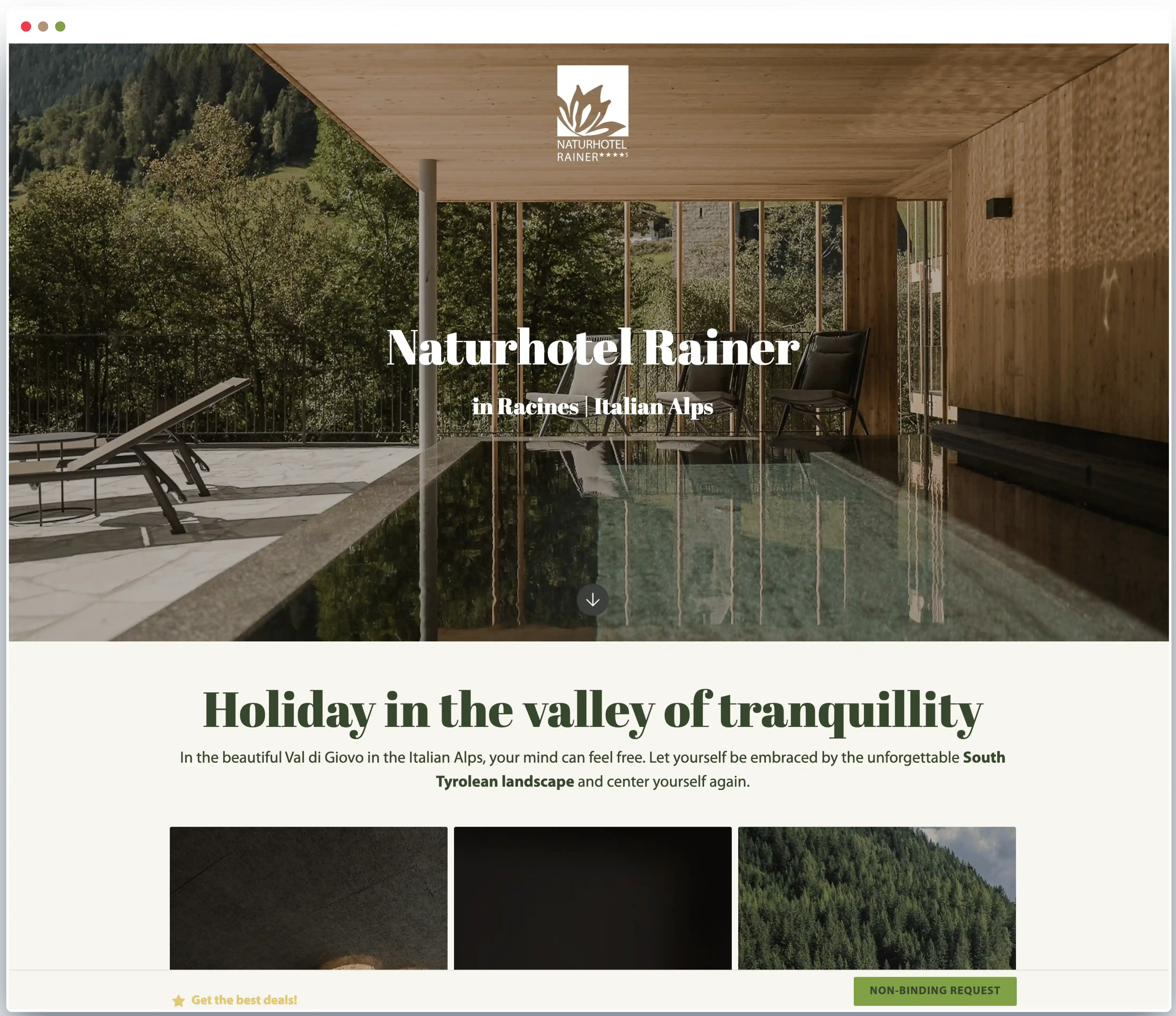
The goal is not to present the entire hotel. Instead, the landing page focuses on the content and selling points that matter most for the specific campaign and the guest’s travel intent. The result is a destination page that clearly belongs to the hotel brand while guiding guests directly toward an inquiry or booking.
What Makes a High-Performing Hotel Landing Page?
A successful landing page follows a clear structure. One proven framework is AIDA, a marketing model that guides users step by step from initial attention to an inquiry or booking.
Attention – Capture Attention
The landing page needs to communicate its purpose immediately. The headline, imagery, and opening copy should continue the promise made in the ad so users instantly know they have arrived at the right place.
Interest – Build Interest
Next, present the offer’s most important benefits. Focus only on content relevant to the campaign rather than trying to showcase the entire hotel.
Desire – Create Desire
Inspiring imagery, compelling benefits, guest reviews, and awards can strengthen the desire to stay while building trust in the hotel and its offer.
Action – Drive Action
Finally, the page needs a clear call to action, such as “Request an Offer” or “Book Direct.” The CTA should be easy to find, and submitting an inquiry or completing a booking should be fast and straightforward – especially on mobile devices.
How Do Landing Pages Affect the Hotel Website?
A common misconception in hotel marketing is that sending paid clicks to a landing page instead of the hotel website deprives the website of valuable traffic and may therefore reduce its visibility on Google.
Paid advertising, however, does not directly affect how Google ranks a hotel website in organic search results. Google itself confirms that, for organic rankings, it makes no direct difference whether an ad leads to the general hotel website or to a separate landing page.
Campaigns can still strengthen organic demand indirectly. Ads increase a hotel’s visibility and reach, helping build brand awareness. A guest who first discovers a hotel through an ad and landing page may search specifically for that hotel later and return through an organic search result.
Paid search can therefore generate additional branded searches and organic website visits. But paying for the original click does not, by itself, improve the hotel’s Google ranking.
Sending paid clicks to a landing page instead of the hotel website does not weaken the website’s SEO performance. Instead, it ensures that paid traffic reaches a destination designed specifically around the campaign objective.
When Do Landing Pages Make the Most Sense for Hotels?
Landing pages are not only useful for large campaigns. They are especially valuable when hotels want to build demand for specific periods or offers.
How Landing Pages Create Specific Reasons to Travel
Demand in leisure hospitality is often uneven throughout the year. Peak seasons and holidays may sell strongly, while shoulder seasons, weekdays, or isolated gaps in occupancy can be more difficult to fill.
Consider a hotel that wants to increase demand in November. On the hotel website, November is simply one of many possible travel periods. A landing page can give it a compelling identity: a peaceful wellness escape, a culinary getaway, a romantic retreat, or a relaxing break before the holiday season.
This creates a specific reason to book. Guests no longer see only a hotel—they see a vacation idea that fits a particular moment.
Conclusion: Make Hotel Websites and Landing Pages Work Together
Hotel websites and landing pages are not competing with each other. They serve different purposes and should work together strategically as part of the hotel’s marketing.
The hotel website remains the property’s digital foundation. It builds trust, strengthens the brand, supports SEO, and showcases the full hotel experience.
The landing page is the right tool for paid campaigns. It picks up on a specific interest and guides users directly toward action.
Landing pages connect the ad, the offer, and guest expectations into one clear journey. They minimize distractions, increase relevance, improve measurability, and increase the likelihood of direct inquiries and bookings.
Paid traffic is valuable – and expensive. It should not disappear into a general hotel website. Nor should hotels buy traffic in the hope that doing so will automatically improve SEO rankings. The goal is different: every paid click should have the best possible chance of becoming a measurable booking.
Want to get more from your campaigns? Schedule a no-obligation consultation with ADDITIVE.
- Why lead generation is essential for hotels
- How to sustainably increase occupany and turnover
- How to automatically attract new guests

- Why lead generation is essential for hotels
- How to sustainably increase occupany and turnover
- How to automatically attract new guests
Book your Hotel Marketing Consultation:
15-Minute Expert Session - Free & without Obligation
- Exclusive one-on-one video call — free of charge, with no obligations
- In-depth assessment of your current digital marketing setup
- How to leverage guest data to drive direct revenue growth
- Proven strategies to boost occupancy and booking performance
Frequently Asked Questions About Landing Pages in Hotel Marketing
- Why lead generation is essential for hotels
- How to sustainably increase occupany and turnover
- How to automatically attract new guests