
Designing Smarter Forms: How Hotels Can Generate More Guest Leads

The easier the first step, the greater the chance to capturing valuable guest leads. The “Two-Step” approach lowers the initial barrier, generates more usable contacts, and creates greater potential for direct bookings.
Why Many Hotel Websites Lose Valuable Leads
Lead generation is the process of collecting contact details from potential guests. A newsletter sign-up form or an offer request should do exactly that: turn interest into a usable lead and guide that lead toward a booking. How well this works depends largely on how the form is structured. In practice, however, the opposite often happens. The more complicated a form is, the more likely potential guests are to abandon it before submitting their information. This is especially true during the first interaction, when prospects are not very familiar with the hotel. At this stage, a lengthy form can quickly become a barrier.
This is particularly relevant for hotels because a lost lead means one fewer potential guest in their direct sales funnel. It is therefore worth taking a closer look at how lead generation forms are structured – and whether a different setup could turn more prospects into usable contacts.
What is the "Two-Step" Approach?
The "Two-Step" approach divides a longer form into two shorter, consecutive steps instead of requesting all information at once:
- Step 1 – a simple entry point:
The first step asks only for the guest's email address. It is intentionally kept short to minimize the initial barrier. - Step 2 – targeted follow-up:
The second step requests additional information, such as title, first name, and last name. This turns the initial lead into a guest contact the hotel can address personally.
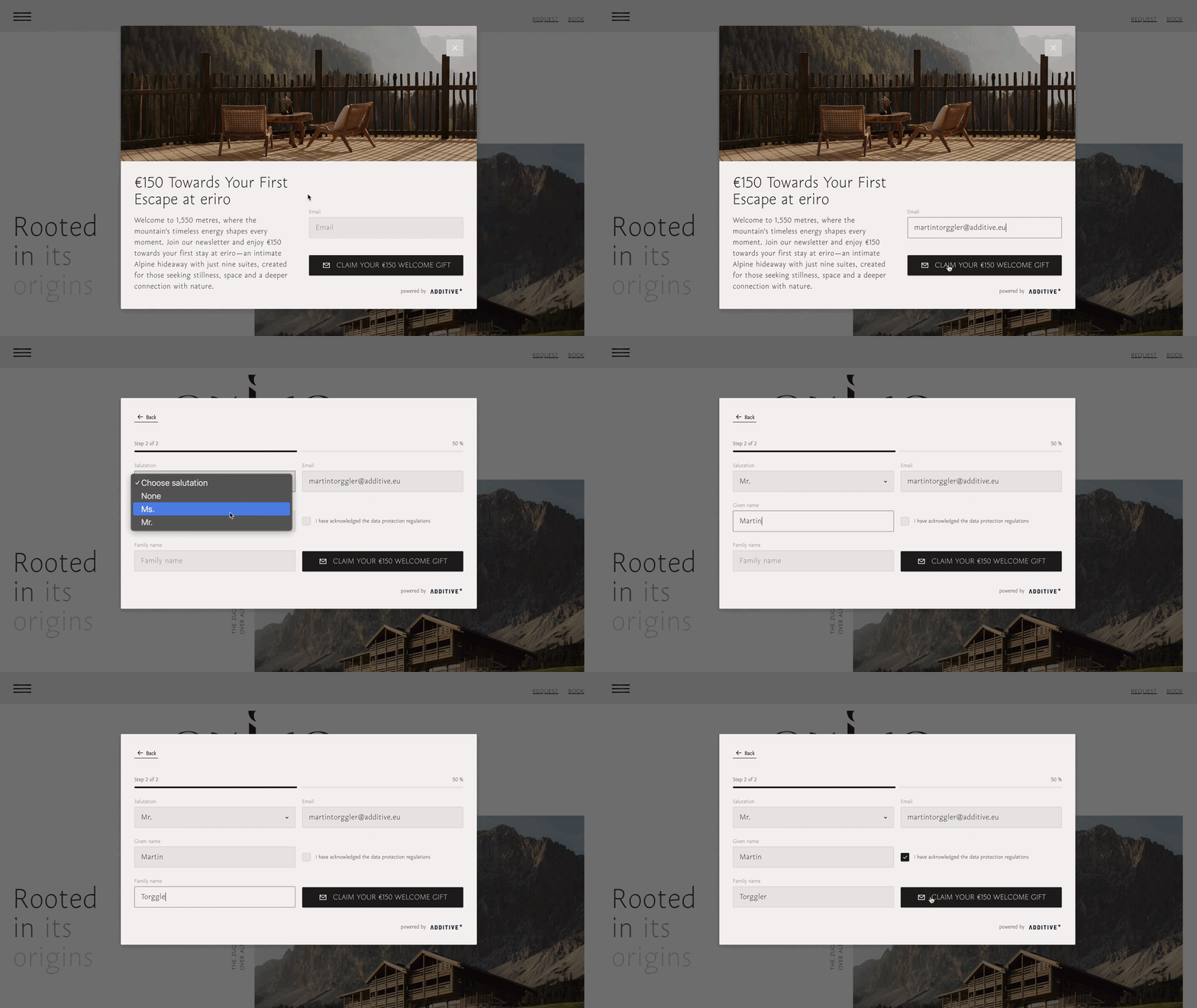
The idea behind this approach is simple: people find it easier to commit to several small steps than to one large one. Each completed step represents a small but conscious decision, also known as a “micro-commitment”. Once someone has shared their email address, they have already taken an initial step toward engaging with the hotel. This makes them more likely to continue. For guests, the process feels less like completing a traditional form and more like receiving gradual, personal guidance.
.webp)

What Are the Benefits for Hotels?
Reducing the effort required beginning directly affects several key hotel marketing metrics:
- More usable guest leads:
Because the initial barrier is lower, more potential guests confirm their email address. This confirmation, also known as the Duoble-Opt-In rate, or DOI rate, is essential. It determines whether a contact can legally and practically be used for further guest communication. - Higher lead quality:
Potential guests who complete both steps demonstrate genuine interest rather than making a casual, noncommittal sign-up. This reduces unused data in the database and creates a higher-quality contact list with relevant leads. - More direct bookings:
Hotels can engage qualified leads more personally and strategically throughout the digital guest journey, for example with relevant offers. This also makes it easiest to convert them into actual bookings. - Greater marketing efficiency:
When a larger share of acquired leads can actually be used, existing marketing activities become more effective.
What the Data Shows
To determine whether this approach delivers measurable results for hotels, it was tested in live operations for three months with more than 150 clients. The result: compared with a traditional one-step form, the number of confirmed, usable leads increased by 16%.
This impact is especially noticeable in hospitality, where trust and a strong first impression play a major role. A form that feels gradual and less demanding supports a guest experience that should feel personal and welcoming from the very beginning – not only on the website itself at the first digital touchpoint.
When Is a Two-Step Form Better Than a One-Step-Form?
A two-step form is not the right solution for every situation. Depending on the context, different factors may support one model or the other.
One-Step Form:
- Provides immediate transparency about the information being requested
- Offers a direct, uninterrupted process
- Gives guests a complete overview of all required steps
A one-step form works particularly well when the user’s intent is already clear. For example, a guest may want to submit a specific booking request for a defined travel period and number of people. It is also a good choice for intentional newsletter sign-ups, especially when the guest already knows the hotel or has searched for it directly.
Two-Step Form:
- Offers a simple, low-barrier entry point
- Reduces perceived "form stress" and cognitive lead
A two-step form is the better choice for more complex requests or when visitors are still developing their interest. Examples include downloading a seasonal travel guide or seeing a pop-up with a clear price advantage when leaving the room category page. At this stage, many prospects are still comparing several hotels. A simple first step can make it easier to capture their contact information before they leave.
The right model therefore depends on where the form appears in the guest journey and how clearly defined the guest’s interest is at this point.
A Small Barrier Can Make a Big Difference
The “Two-Step” approach shows how strongly the user experience can influence digital guest acquisition. When the first step is easy, prospects are more likely to engage with the hotel. When the second step is structured effectively, hotels gain valuable data and create better conditions for personalized, targeted communication.
For hotels, this is an important opportunity. More confirmed leads, cleaner data, and more targeted follow-ups increase the likelihood of not only reaching potential guests, but converting them into direct bookings over time.
Whether a two-step form is the right choice for a hotel’s marketing strategy depends on its target audience, campaign structure, website, and existing guest communication. In a no-obligation consultation, the ADDITIVE team will be happy to identify the opportunities this approach could create for your hotel’s lead generation and direct booking strategy.

- Why lead generation is essential for hotels
- How to sustainably increase occupany and turnover
- How to automatically attract new guests

- Why lead generation is essential for hotels
- How to sustainably increase occupany and turnover
- How to automatically attract new guests
Book your Hotel Marketing Consultation:
15-Minute Expert Session - Free & without Obligation
- Exclusive one-on-one video call — free of charge, with no obligations
- In-depth assessment of your current digital marketing setup
- How to leverage guest data to drive direct revenue growth
- Proven strategies to boost occupancy and booking performance
- Why lead generation is essential for hotels
- How to sustainably increase occupany and turnover
- How to automatically attract new guests