Major Events in Hotel Marketing: How Hotels Can Spot Demand Shifts Early

Major events such as the FIFA World Cup can temporarily change travel and booking behavior across entire source markets, even in destinations far from the host cities. For hoteliers in the German-speaking markets and across Europe, the same question comes up again and again: How does an event like this actually affect your own hotel occupancy, and how can you use these insights strategically for future major events?
Whether it is the FIFA World Cup, the UEFA European Championship, or the Olympic Games, major international sporting events create recurring patterns in travel behavior. With the right data, hotels can identify these patterns reliably and evaluate them early. The event itself is not the decisive factor. What matters is when you respond, and this is where many hotels still have untapped potential.
If You Wait Until the Gap Is Visible, You Have Already Lost Time
A common mistake when dealing with major events is focusing only on the current booking forecast. Hotels often take action only when a period starts to look noticeably weaker than usual in the reservation overview. By that point, valuable lead time has already passed – time that would have been critical for targeted, cost-efficient countermeasures.


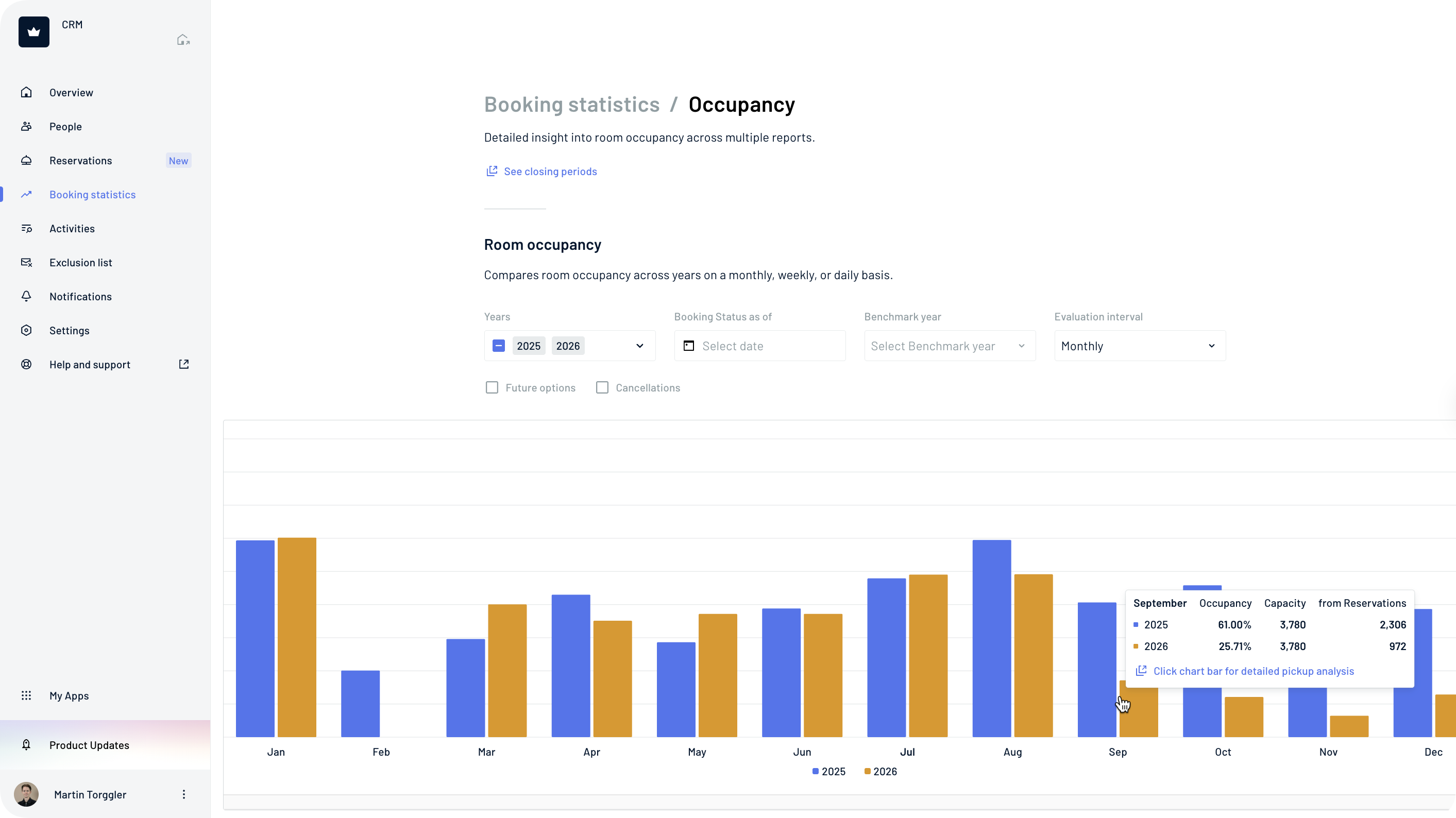
For example, a hotel may see booking demand from a traditional source market slow down during the tournament. At the same time, demand from another market – such as Belgium, Italy, or a travel segment less focused on soccer - may remain stable or even increase. In that case, the hotel should market more actively to the stronger segment instead of continuing to spend the same budget on an audience that is losing momentum.
<div class="article_quote"><div class="article_quote_contain"><div class="article_quote_quote">"Major events such as the FIFA World Cup do not create the same pattern for every hotel. What matters is identifying shifts in your own booking data early, instead of reacting only once a visible gap has already appeared."</div><div class="article_quote_name u-text-style-main">David Weitlaner, Head of Digital Marketing</div></div></div>
Use Guest Data Before Buying New Demand at a Higher Cost
When hotels identify this kind of shift early, the most effective first step is often closer than many hoteliers think: their own guest database. CRM, newsletters, and automated email communication make it possible to re-engage existing contacts with a relevant reason to stay - for example, guests who previously showed interest in a specific period or offer but have not yet booked.
This type of reactivation is usually far more efficient than trying to generate new demand at short notice through pure new-customer acquisition. These guests already know the hotel. Trust is already there. Communication can be tailored precisely to the occasion. Only after this existing potential has been fully used does it make sense to look at new, carefully selected target groups and source markets.
<div class="infobox_1_item"><div class="infobox_1_heading_wrap u-mb-4 u-hflex-left-top u-gap-2"><img src="https://cdn.prod.website-files.com/673f1b4d7fc04861927e7983/6793e75bb4e588f56db3f9a5_info_icon.svg" loading="lazy" alt="Info Icon" class="infobox_1_icon"><div class="u-text-style-small u-weight-bold u-color-gold-100">What Is Newsletter Marketing?</div></div><p class="u-text-style-main u-weight-bold u-mb-4"> Newsletter marketing is ideal for reaching existing guest contacts directly by email. In hotel marketing, it helps reactivate past guests and prospects with relevant offers – efficiently, personally, and without high levels of wasted reach. </p><a href="https://www.additive.eu/en/marketing-software/additive-newsletter-hotel" class="btn_txt_link w-inline-block"><div class="btn_txt_link-txt u-text-style-small u-weight-bold">Go to ADDITIVE+ NEWSLETTER</div><img src="https://cdn.prod.website-files.com/673f1b4d7fc04861927e7983/6793e75bcb954ae4ad31b7cb_arrow-up.svg" loading="lazy" alt="Up Arrow" class="btn_txt_icon"></a></div>
The Trap of Premature Discounting
When a period looks weaker than usual, the temptation to react quickly with discounts is strong. But this is exactly where hotels can fall into a costly trap. If demand has merely shifted rather than disappeared, an early discount cuts into margins unnecessarily. Guests who would have booked a little later anyway receive their stay at a lower rate than needed.
Before considering price promotions, hotels should first take a closer look at the data, target groups, and time periods. Are inquiries shifting to another point in time, or is demand truly missing across the entire booking window? Only after making this assessment can hotels decide whether a targeted campaign to activate existing audiences is enough, or whether a price incentive actually makes sense.
The Year-Over-Year Comparison Trap: When a Shift Looks Like a Decline
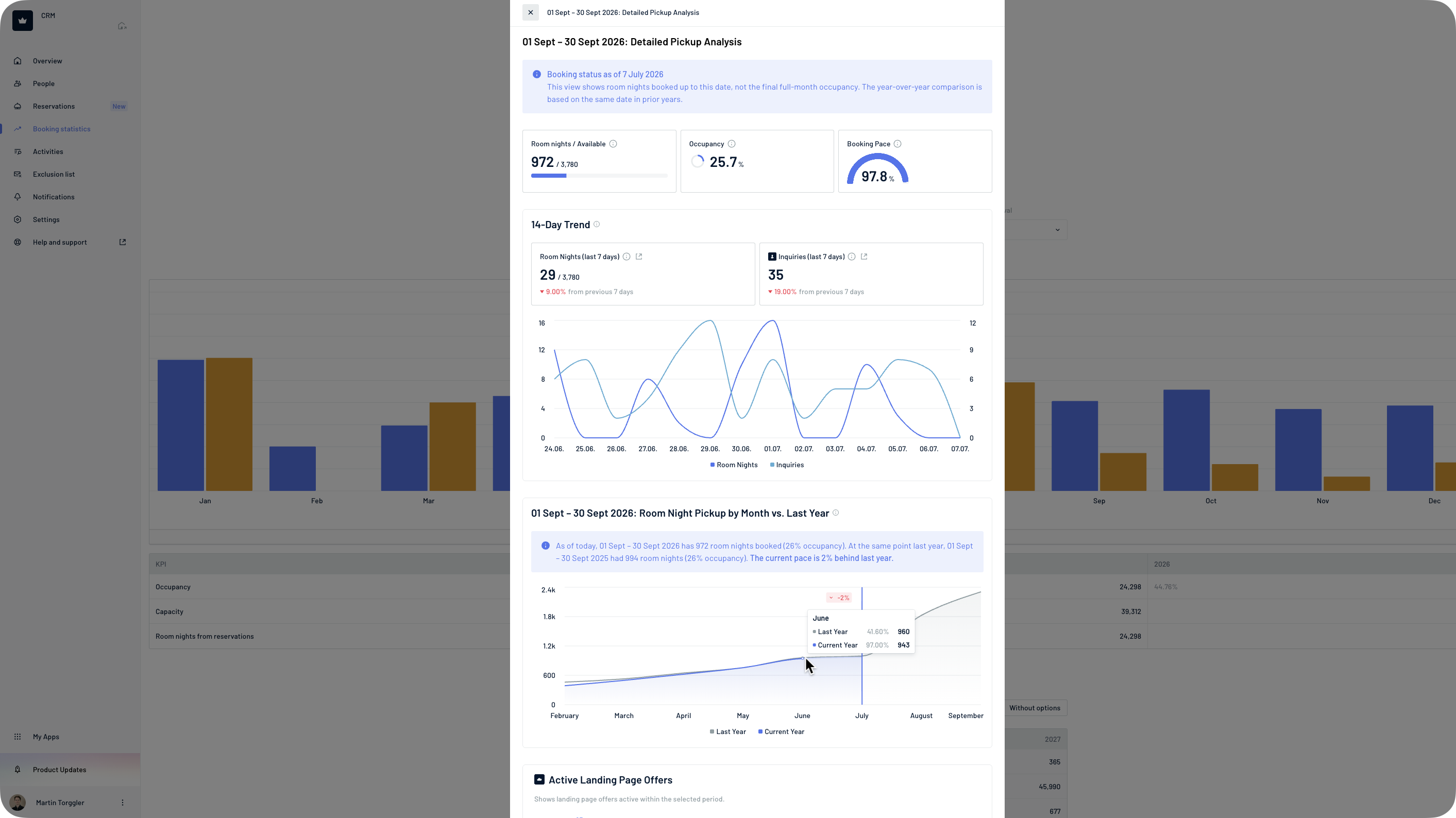
Another factor is often underestimated in day-to-day practice, even though it repeats in regular annual cycles: comparing a “World Cup year” directly with a regular previous year without a comparable major event. When this effect is not taken into account, the numbers can quickly lead to the wrong conclusions. A weaker booking level during a specific period may look like a real drop in demand. In many cases, however, it is simply a timing shift or a change in market dynamics.
Hotels that compare this kind of year with a “normal” year risk making poor decisions in several areas: evaluating their own marketing activities, planning the budget for the following season, or making strategic choices around pricing and target groups. A clean data analysis therefore considers not only traditional holidays but also whether a major event took place during the comparison period. This makes it possible to classify deviations correctly instead of interpreting them broadly as weak demand.
<div class="article_quote is-img"><img src="https://cdn.prod.website-files.com/673f1b4d7fc04861927e7983/68c159367a6f6a6487e8de42_JuliaH%20-%20mit%20Verlauf%20-%20800x800px.webp" loading="lazy" alt="" class="article_quote_img"><div class="article_quote_contain is-img"><div class="article_quote_quote">"Hotels that compare a World Cup year with the previous year without accounting for this effect often draw the wrong conclusions. What looks like a decline is often just a shift – and that difference determines whether the next marketing strategy is built on the right assumptions."</div><div class="article_quote_name u-text-style-main">Julia Hartig, Team Lead Advertising</div></div></div>
Which Data Points Matter Most for Early Detection
To identify shifts before they appear as visible gaps, hotels need to look at several KPIs at the same time:
- Booking pace: How is the number of new reservations for the affected periods developing compared with the previous trend – and when does a deviation become visible?
- Distribution by source market: Is demand shifting between source markets, or is it stable across all markets?
- Distribution across adjacent periods: Is demand moving into the periods before or after the major event instead of disappearing completely?
- Reactivation potential in the existing database: How many existing contacts in the CRM or newsletter list fit the affected period and can be addressed with targeted communication?
Only when hotels monitor these factors continuously can they recognize early whether a specific period requires active countermeasures – and which measure is the right one.
Key Takeaways:
Data-Based Early Detection Instead of Reactive Discounting
The impact of a major sporting event on booking behavior cannot be predicted across the board. But hotels can identify it reliably and early if they continuously monitor the right data. The key difference is not the major event itself. It is the timing of the response. Hotels that recognize shifts before they turn into visible gaps can take targeted action through existing guest contacts and relevant audiences instead of turning too quickly to discounts.
Most hotels already have the insights they need. They simply need to make them visible. A specialized hotel CRM such as ADDITIVE+ CRM brings booking and guest data together in one place and provides the right answers in just a few clicks: Which periods show unusual patterns? Which target groups or source markets are shifting? Which existing contacts can be reactivated with targeted communication? Instead of collecting data manually from multiple systems, hotels have the relevant KPIs available exactly when they need them to make a well-founded decision.

- Increase sales per guest
- 8 tips on how to make guests return
- Using marketing automation successfully in hotels
- What to consider when choosing software

- Increase sales per guest
- 8 tips on how to make guests return
- Using marketing automation successfully in hotels
- What to consider when choosing software
Book your Hotel Marketing Consultation:
15-Minute Expert Session - Free & without Obligation
- Exclusive one-on-one video call — free of charge, with no obligations
- In-depth assessment of your current digital marketing setup
- How to leverage guest data to drive direct revenue growth
- Proven strategies to boost occupancy and booking performance
- Increase sales per guest
- 8 tips on how to make guests return
- Using marketing automation successfully in hotels
- What to consider when choosing software